Samsung Ads
CPX: designing ML defaults advertisers trust.
I defined the platform vision for Samsung Ads' performance campaigns and led design across the whole loop: understanding the audience, setting up the campaign and reading the results. ML makes the predictable choices; every choice stays visible and editable, so Sales, AdOps and advertisers trust it..
Role
Senior Product Designer; design lead for the performance platform. Set the CPX platform vision and led automation strategy across setup, optimization and reporting
Partners
Sales, AdOps, Product, ML, Engineering, creative optimization
Users
CSMs, AdOps, Sales and advertisers
Scope
Audience Insights, campaign and flight setup, reporting
30-90%
performance lift for Canela and Crunchyroll TV conversion campaigns, Q4 2025
142%
of ROAS target for Candy Crush (King), which then raised daily spend
30%
faster audience builds with multi-source insights
~30 min
saved per campaign setup through automation and error checks
THE BIG PICTURE : THE PERFORMANCE FRAMEWORK
Four principles instead of feature-by-feature fixes
I reframed CPX from a single lower-funnel product into a performance platform built on four rules.
-
1 - Automate predictable decisions
Rule-based defaults and ML-assisted KPI and audience selection.
-
2 - Design once, scale across formats
Reusable optimization logic for TV, web and mobile without new workflows.
-
3 - Make optimization actionable
Reporting that surfaces signals people can act on, not just tables.
-
4 - Protect operational efficiency
Growth without adding work for AdOps or Sales.
Three Acts : Understand, set up, measure
-
Act 1 : Understand the audience
Insights before the campaign starts.
-
Act 2 : Set up with ML defaults
Campaign and flight setup that fills itself in.
-
Act 3 : Measure and act
Reports people can read and share in one click.
BACKGROUND
Why it mattered
-
Lower-funnel was the growth engine. CPX offered performance-based pricing to win advertisers new to Samsung Ads.
Setup didn't scale. Every campaign needed significant manual input from AdOps, which capped how many advertisers we could take on.
Built for one format. CPX couldn't extend to TV, web and mobile without new workflows.
Signals came late. Reporting had no real-time view, which slowed optimization and decisions.
-
They could pull only one audience per report and stitched data together by hand. Reports for clients took hours.
The business needed to scale performance revenue without proportionally scaling headcount or complexity.
How might ML handle the predictable work, while people stay in control of every choice?
ACT 1 • UNDERSTAND THE AUDIENCE
Know who converts before the campaign starts
Audience Insights
Challenge : CSMs and Sales needed audience insight for pre-campaign pitches, but could select only one audience per report.
What I did : Designed multi-source audience selection with an auto-filled cart, Boolean logic to match audiences to KPI goals, and a forecast that updates as the logic changes.
Decision : After launch, users wanted more than surface views, so I added a report-level text summary plus layered charts built on Samsung TV data.
Up to 20 audience segments combined in one report, and audience build time cut by 30%. "Now that I clearly understand my advertiser's target audience, I feel confident to create the campaign." (CSM and AdOps)
See the process
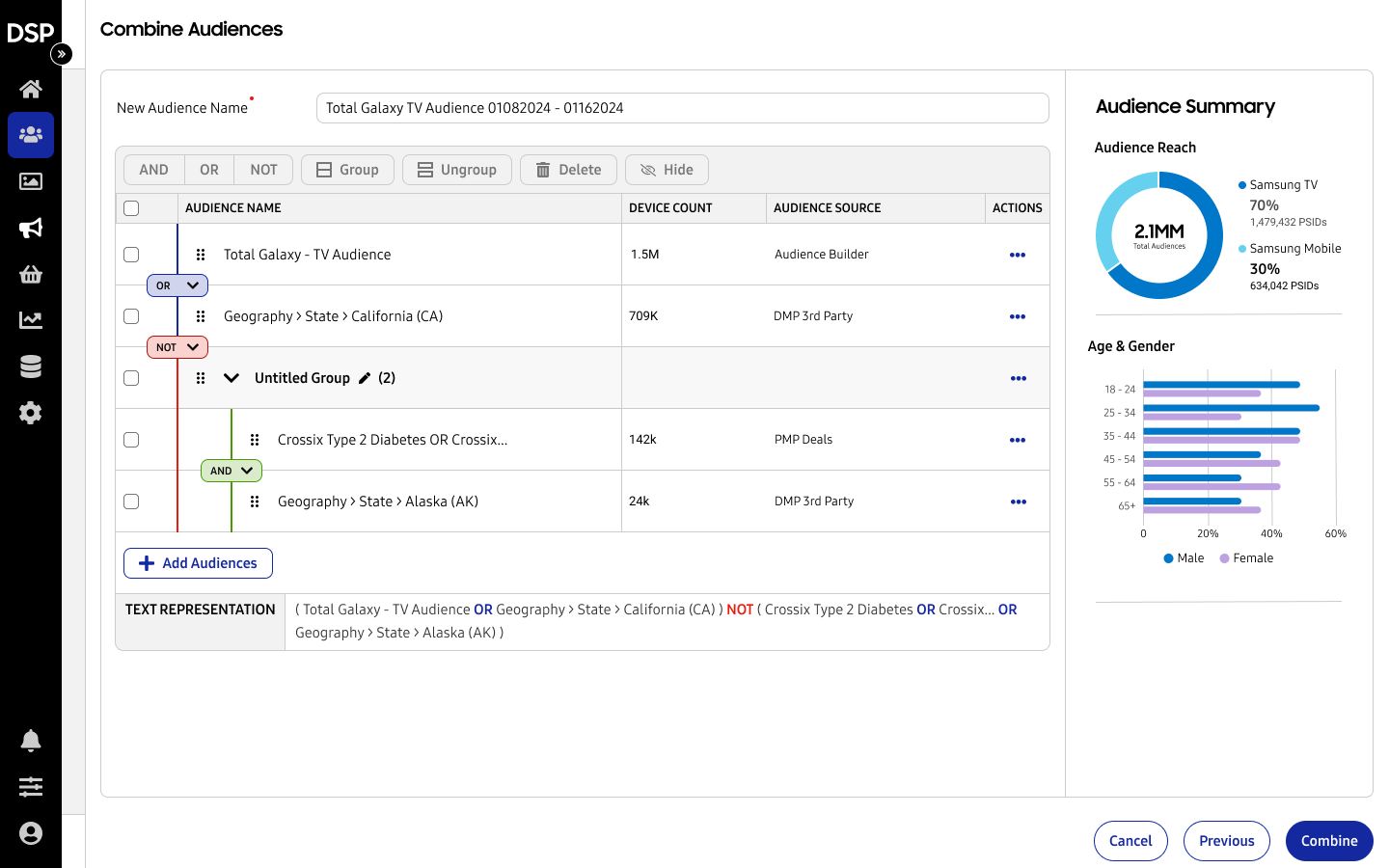
Selection flow, 6 steps
Input, select, multiple sources, Boolean logic, submit, insight ready your carousel images
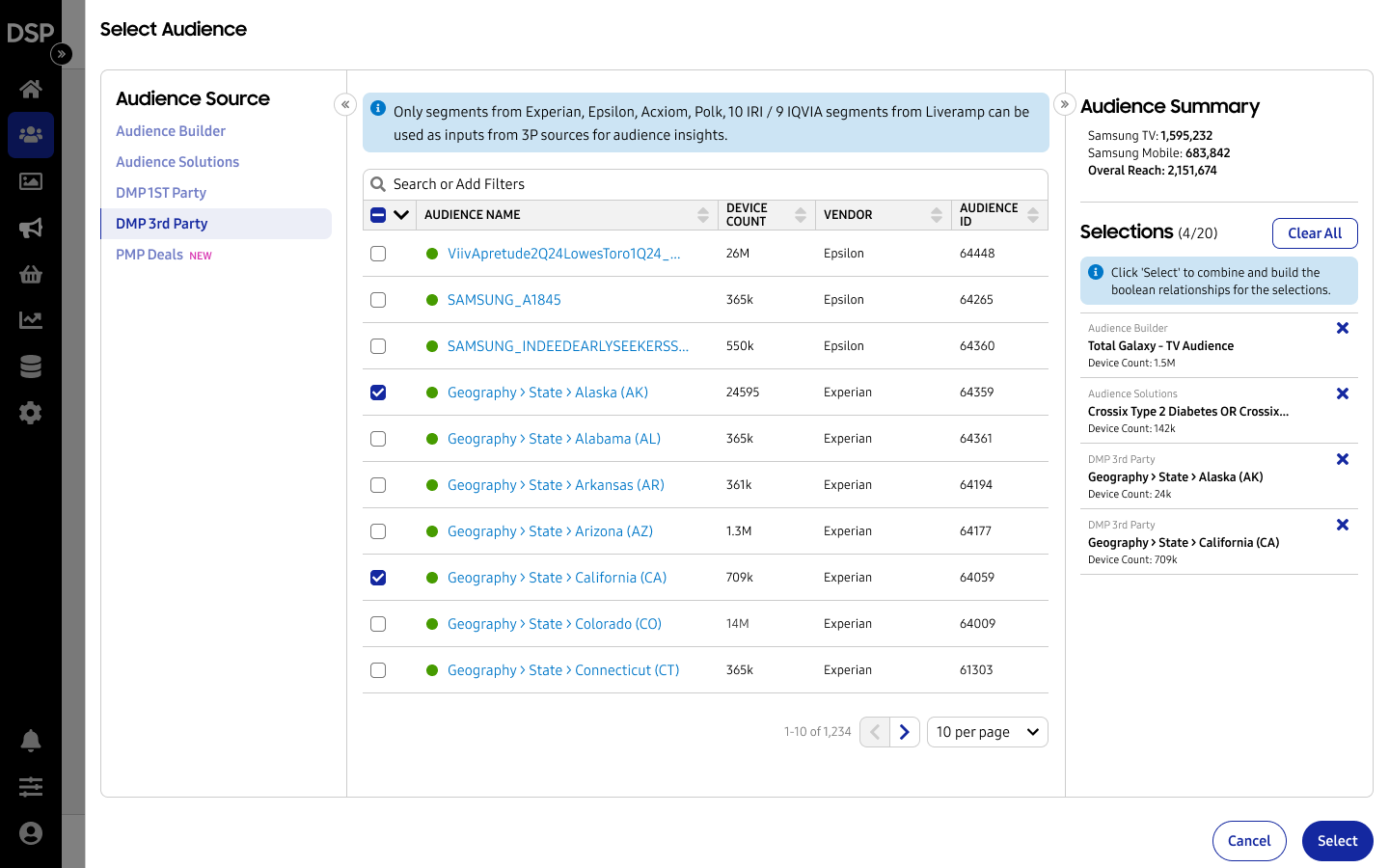
After launch: surface view vs. deeper view
"Users wanted the deeper details and a more visual way to explore data"
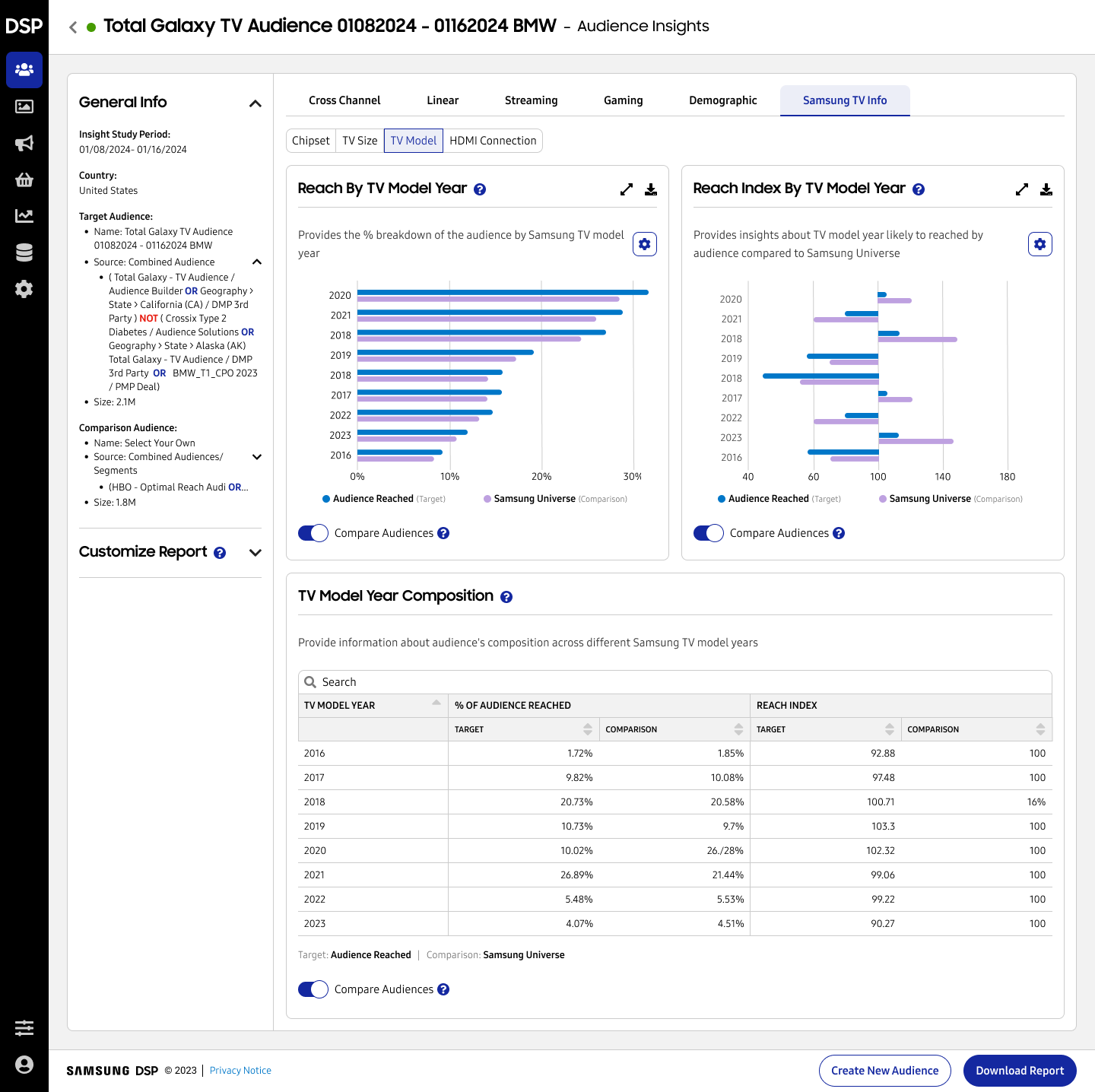
The report
Text overview plus charts in several formats, built on Samsung TV data
ACT 2 • SET UP WITH ML DEFAULTS
Automate wherever intent is predictable
Act 1 feeds Act 2: with the audience insights in hand, AdOps could pick the conversion path that fit the advertiser's goals and audience behavior best.
Campaign setup
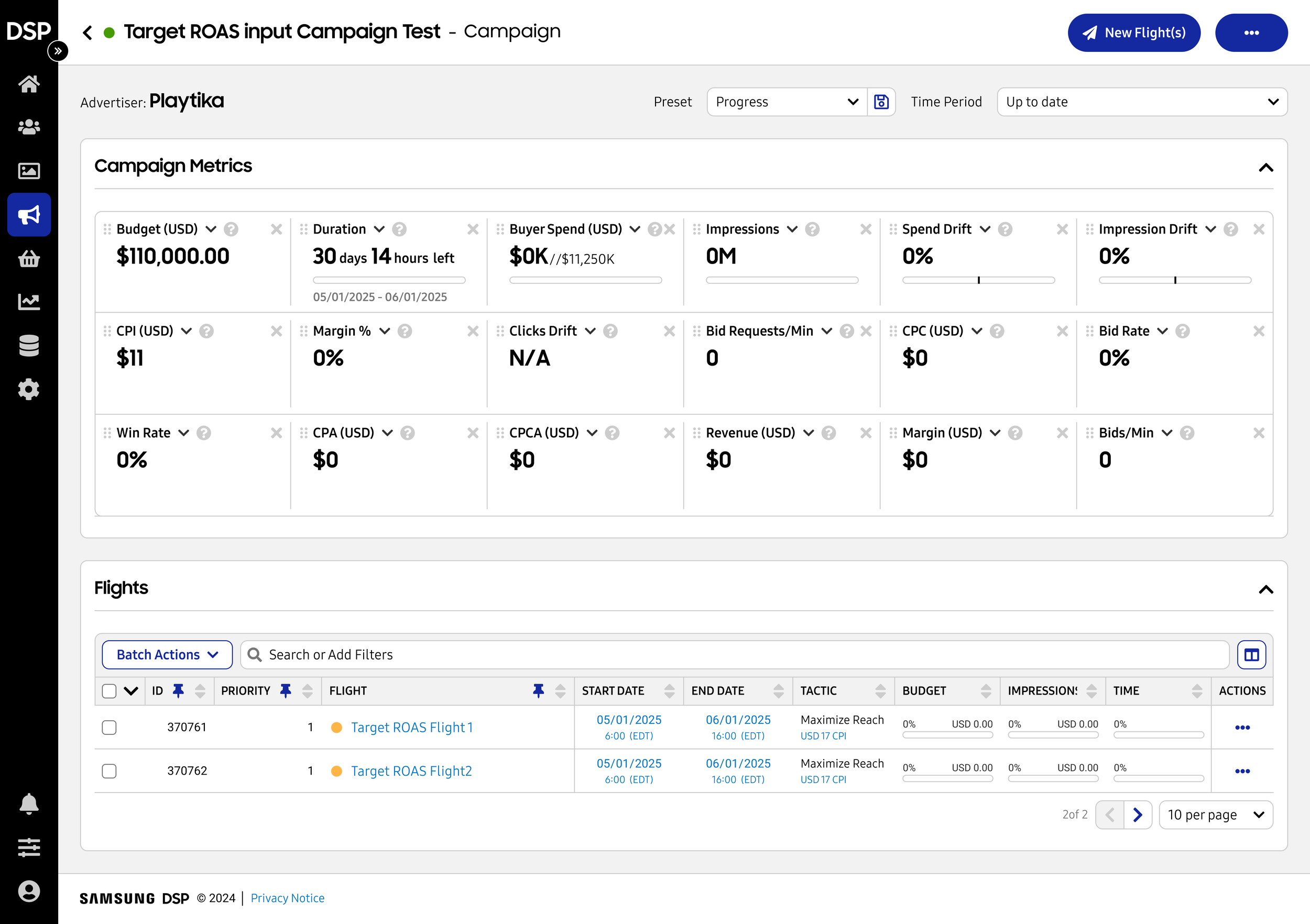
Challenge : Each CPX campaign needed AdOps to enter contract, budget, KPI and audience details by hand.
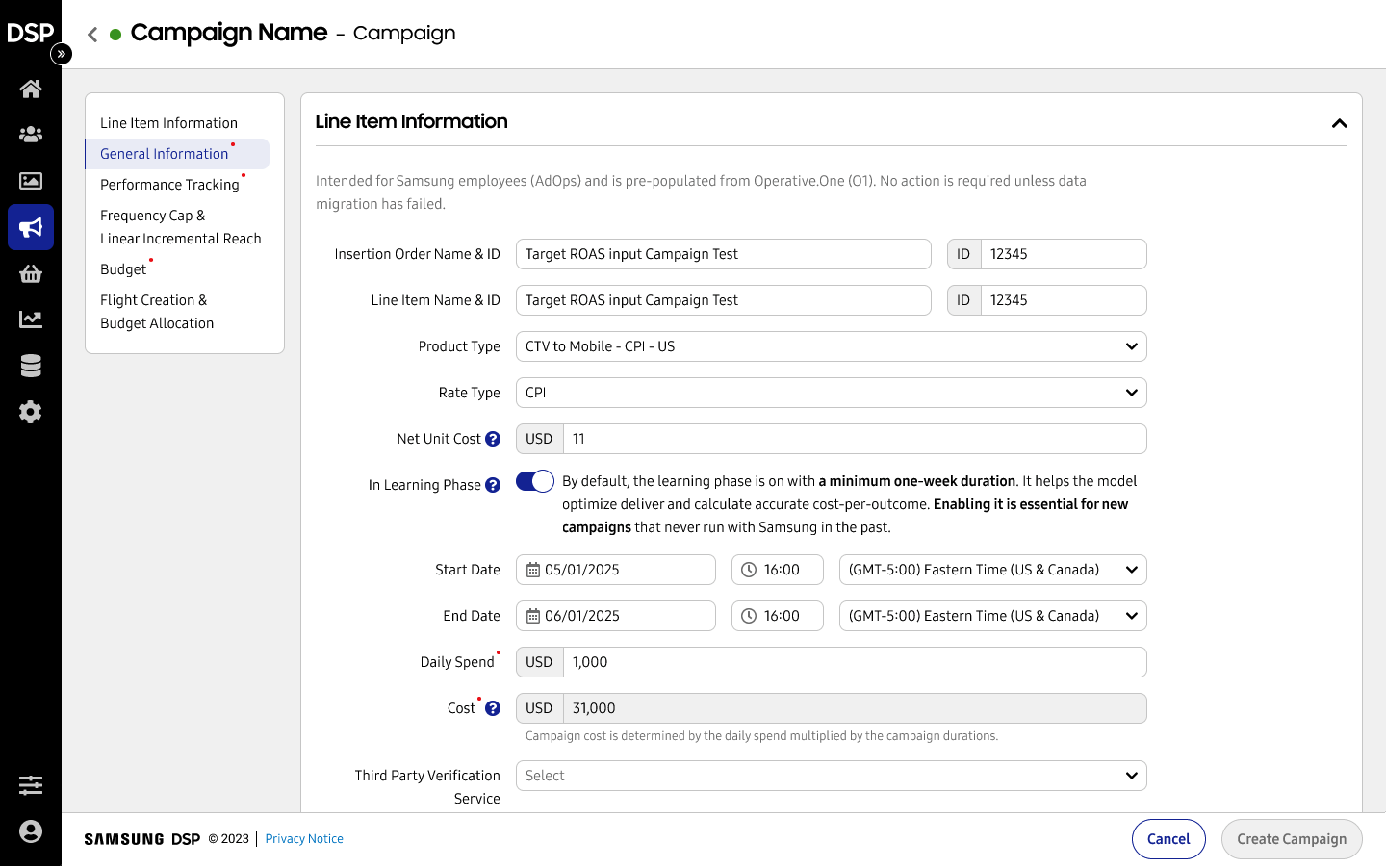
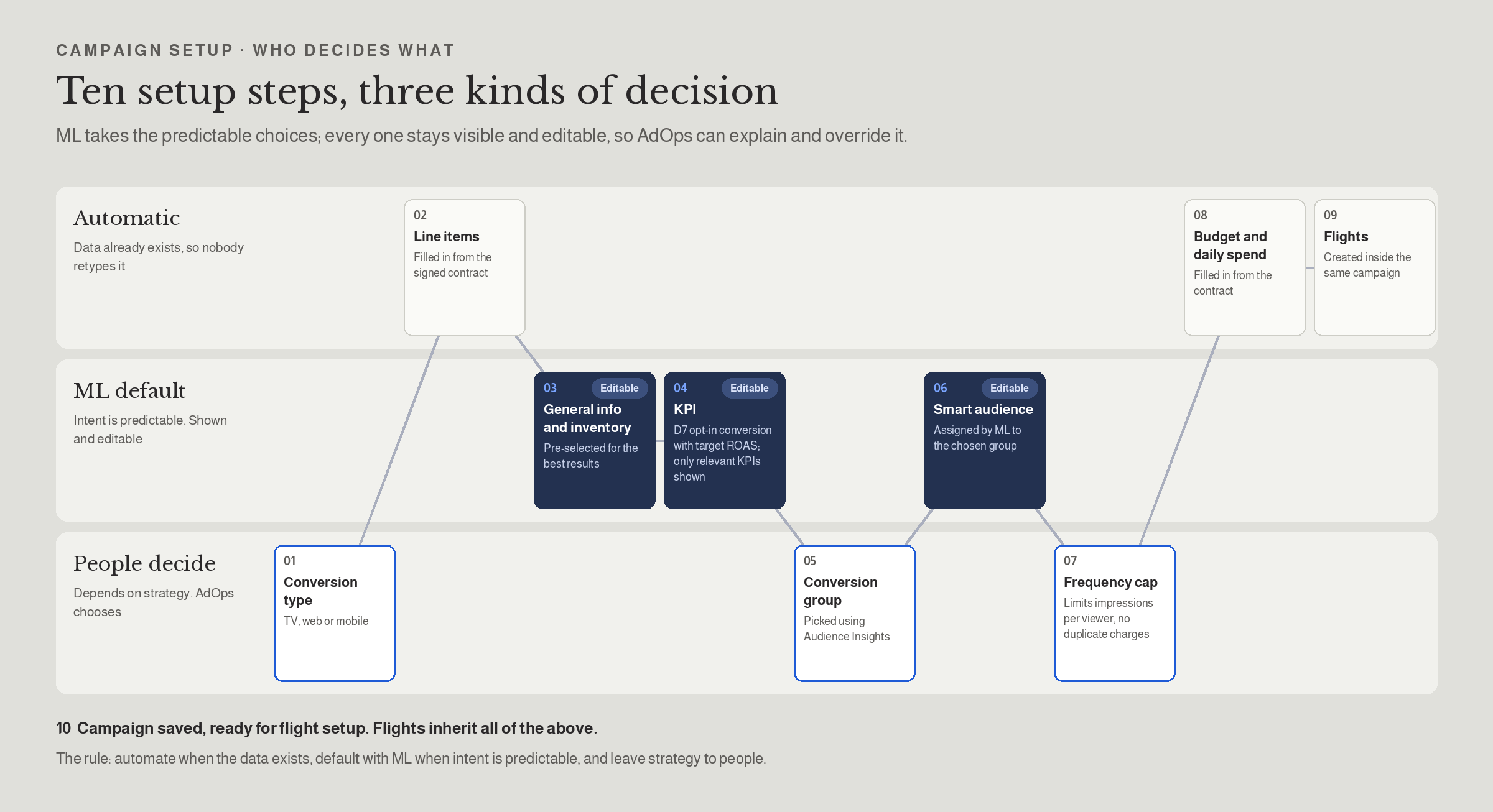
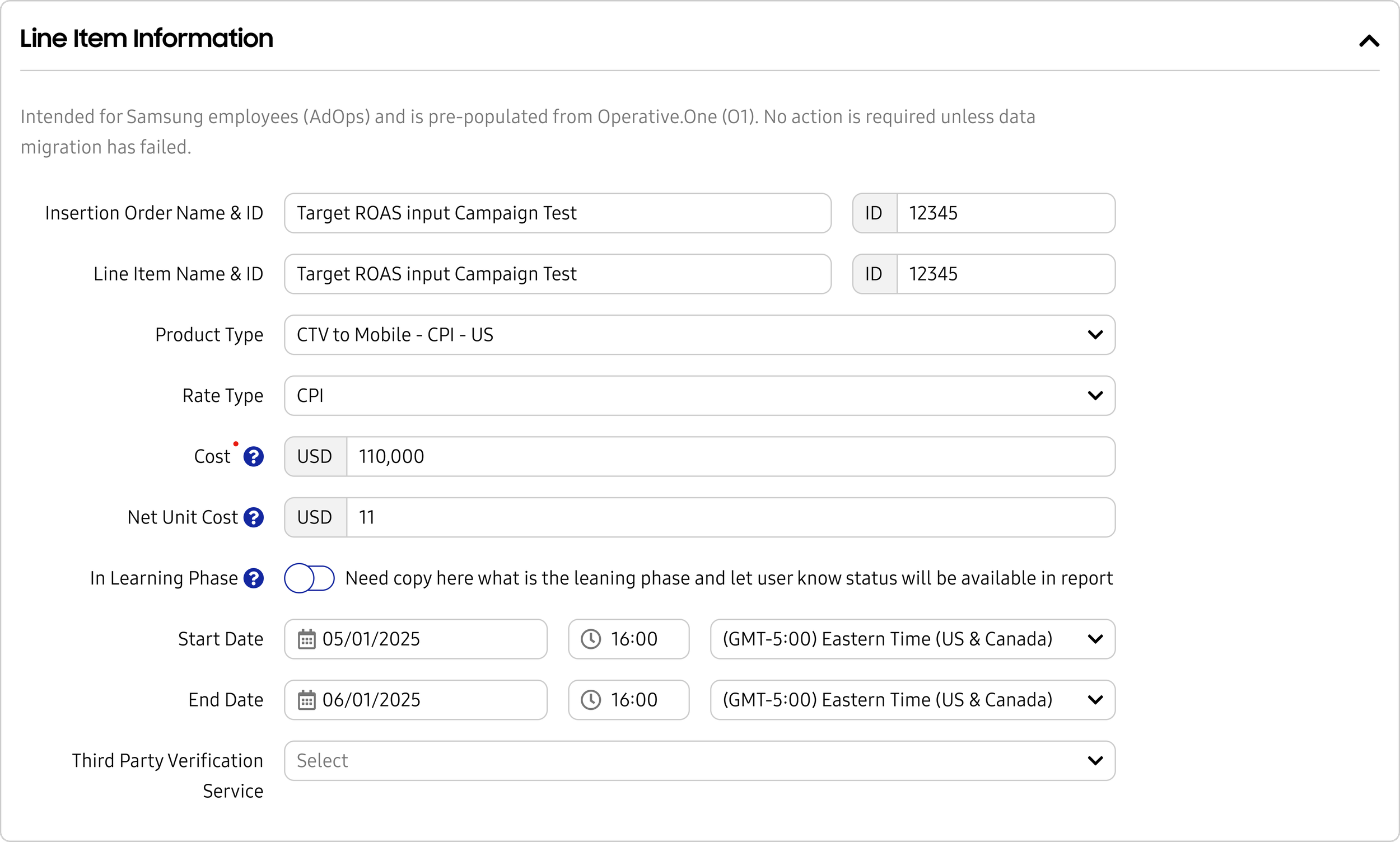
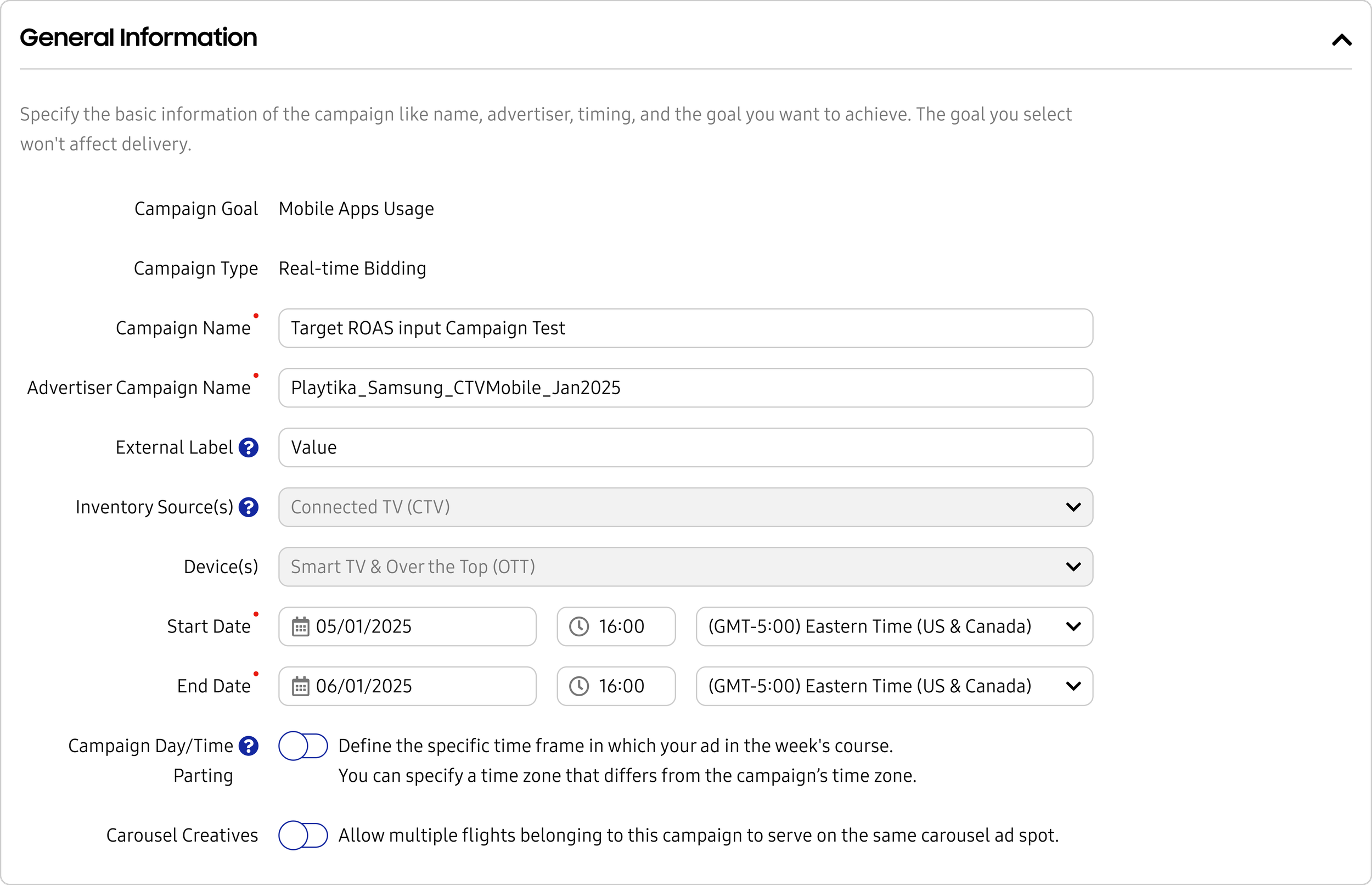
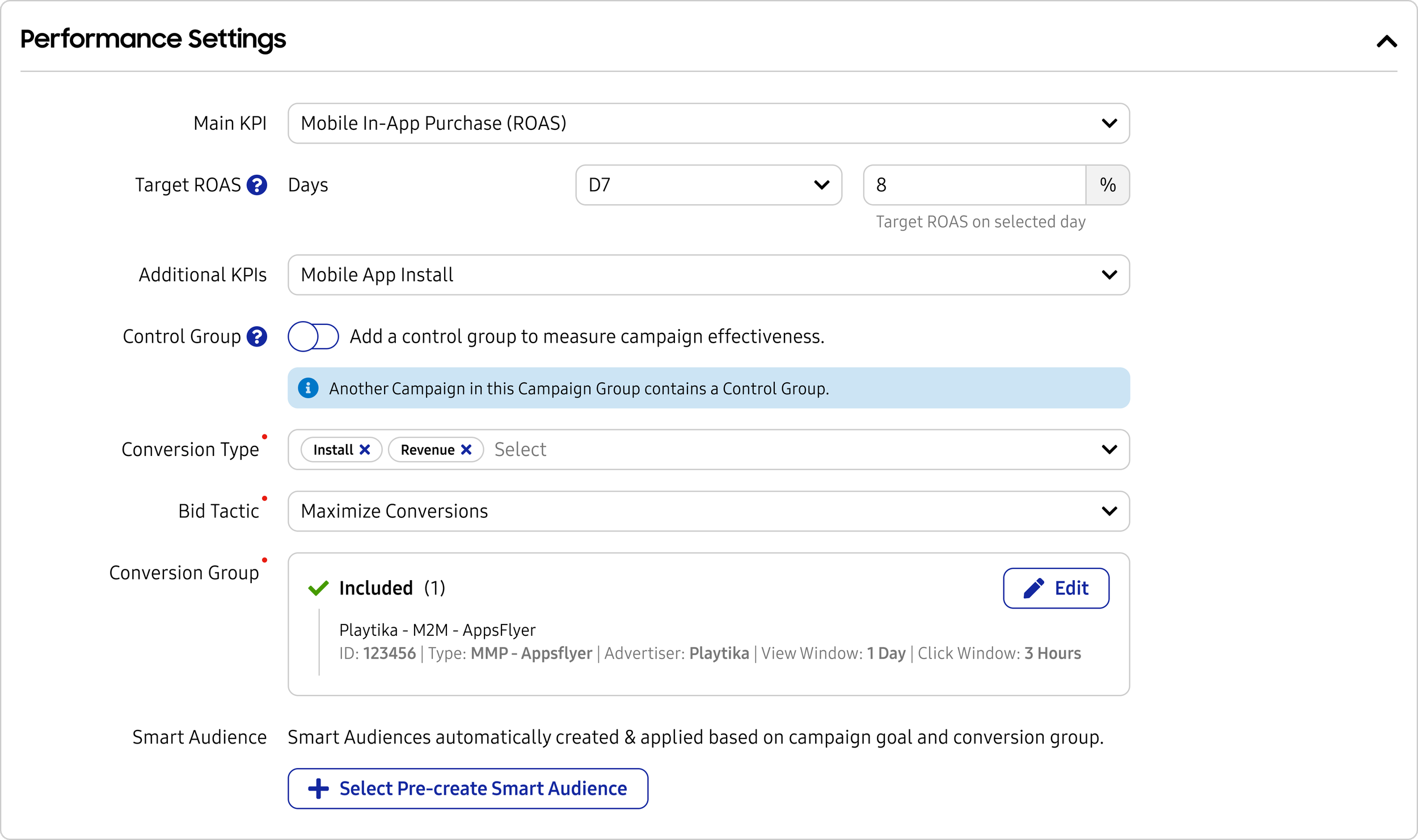
What I did : Redesigned setup so line items, budget and daily spend fill in from the signed contract, only the KPIs for the chosen conversion type (TV, web or mobile) appear, and ML assigns a smart audience. I also standardized KPI and conversion logic at the platform level, so TV, web and mobile share one setup.
Decision : Use ML to optimize, but keep it explainable. ML picks the default (D7 opt-in conversion with target ROAS), but each choice is shown and editable, so AdOps can explain and override it.
~30 min saved per campaign setup. CPX expanded to new verticals (travel, e-commerce and finance), and web conversion beta campaigns launched with Groomie and Golo in Q4 2025.
See the process
Who decides what
Your 10 setup steps sorted into automatic, ML default and advertiser choice
Before / after setup
Manual fields vs. auto-filled from the contract
How I validated
Workflow testing and performance monitoring before broader rollout; feedback loops with AdOps and Sales
Flight setup and creative optimization
Flights inherit everything from the campaign. ML pre-selects inventory and pacing, and with two or more creatives it serves the best one to each audience.
30–90% lift for Canela and Crunchyroll in Q4 2025 with Max Conversion bidding and creative optimization
MMP validation and error checks
Tracking errors are flagged while the creative is selected, and ML suggests fixes, so users resolve issues without backend help.
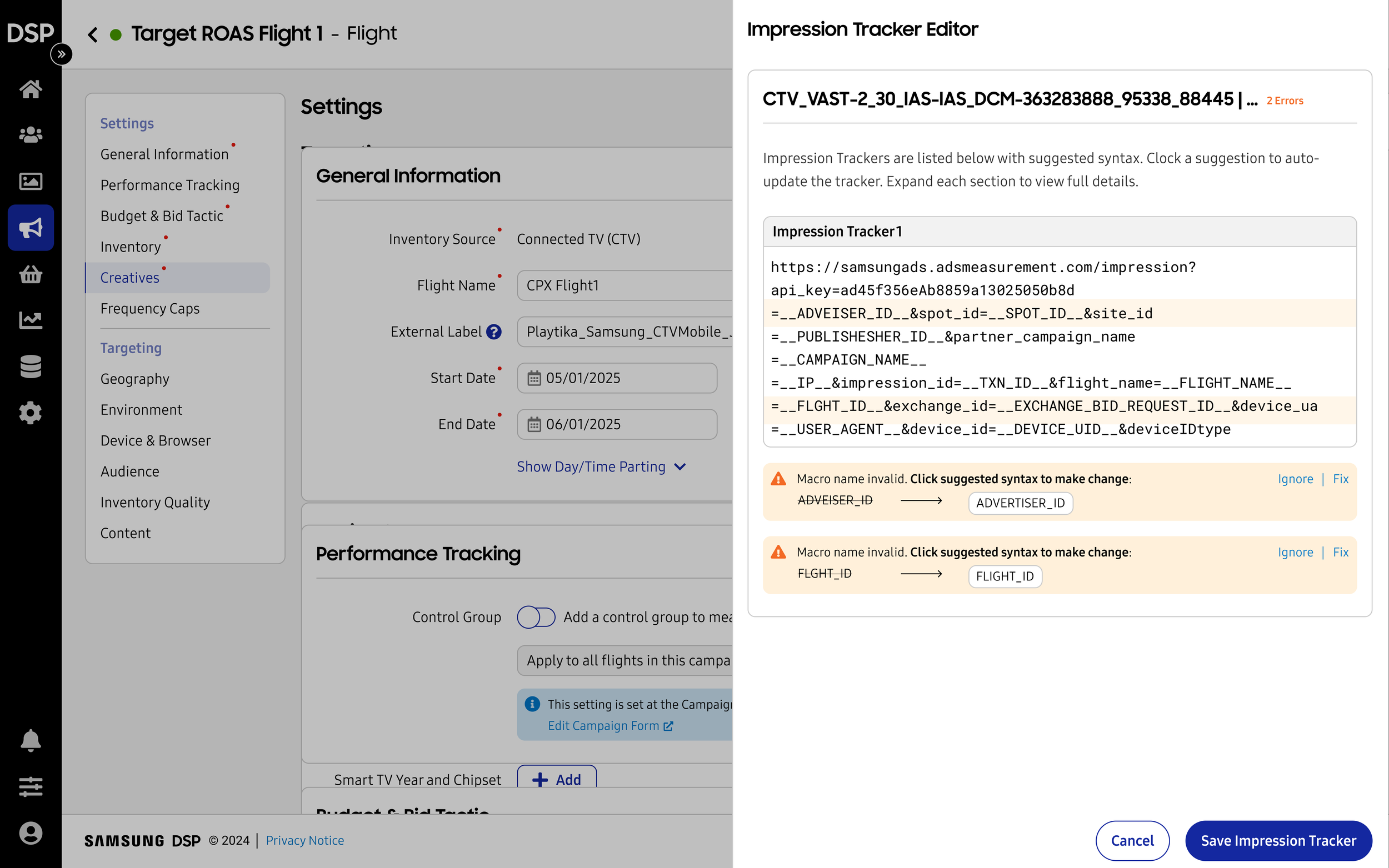
142% of ROAS target for Candy Crush (King Gaming), which then raised its daily spend
ACT 3 • MEASURE AND ACT
Reports people can read, trust and share
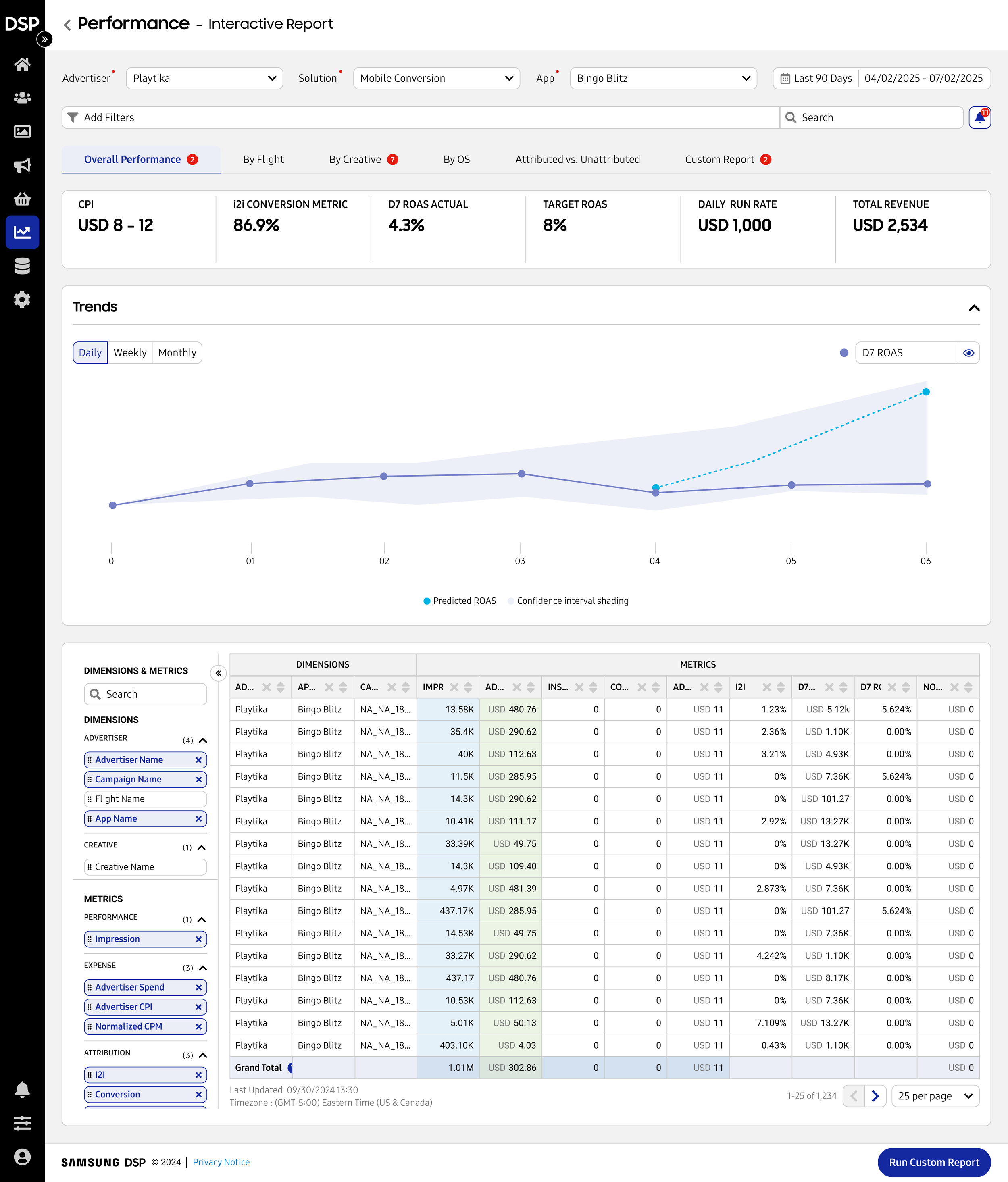
Interactive performance reporting
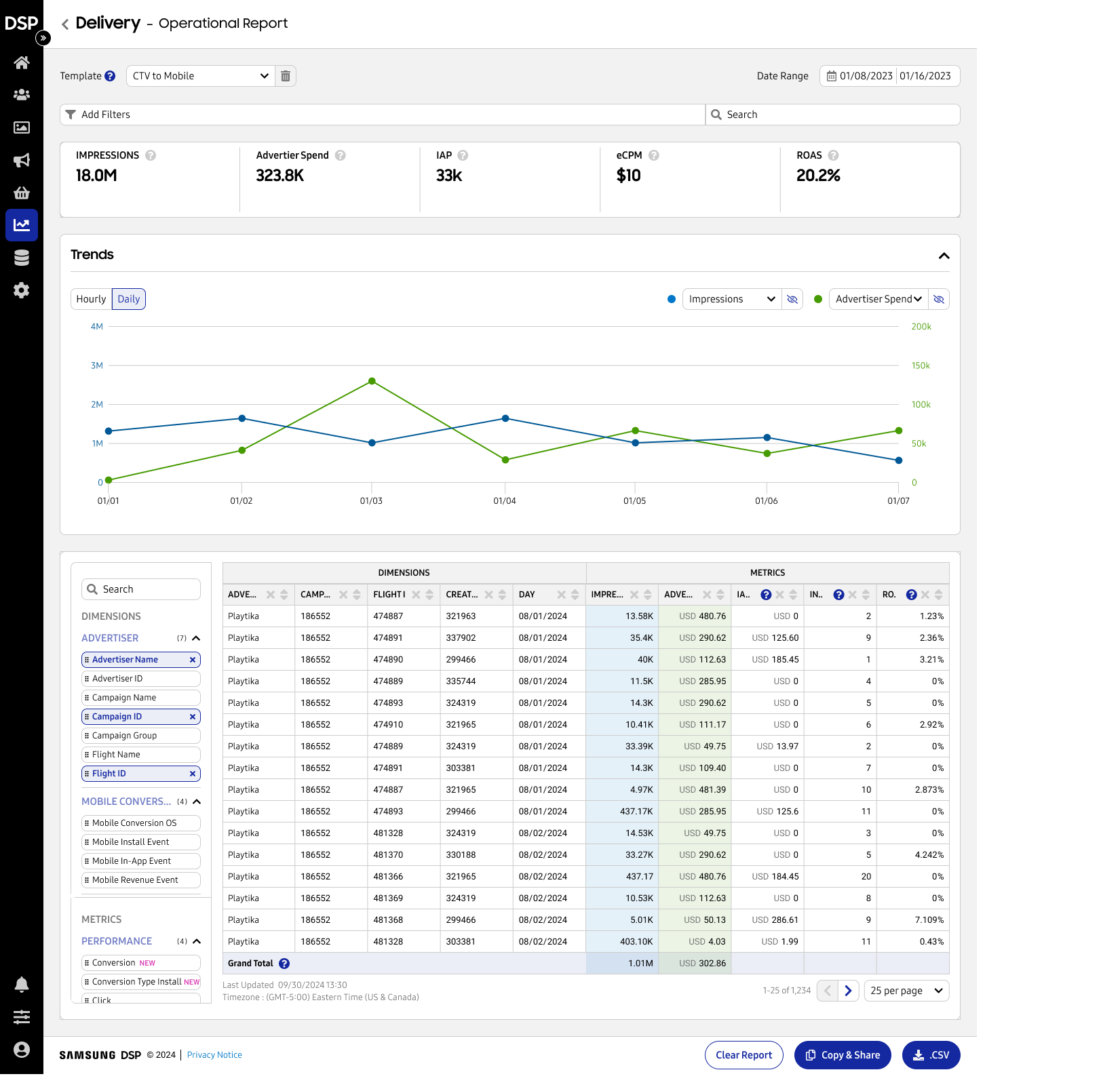
Challenge : CPX tools are internal, so CSMs built client reports by hand. They needed an overview and detail in one place, with one-click sharing.
What I did : Reorganized reporting by advertiser first, then solution (TV, web or mobile), since each channel has its own success metrics. Layered views go from overview down to campaign, flight and creative, with decision trees built in so users can troubleshoot and act faster.
Decision : Export and scheduling live in one place, and external-facing spreadsheets generate in one click.
Half the reporting time: "With this update, I cut my reporting time in half. What used to take me hours now takes just minutes." (CSM and AdOps)
See the process
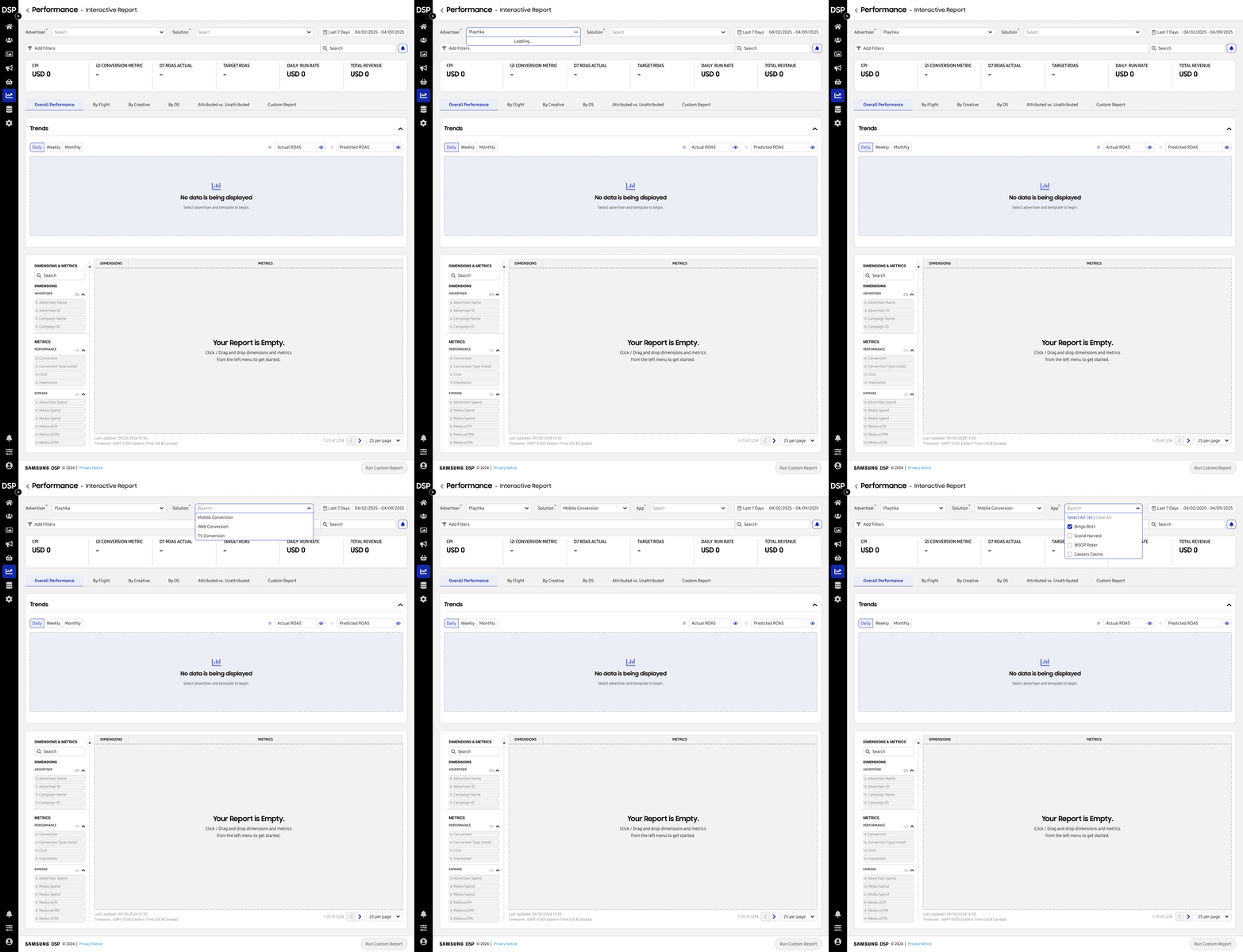
Report flow, 5 steps
Report, advertiser, solution, apps, overview and breakdown your carousel images
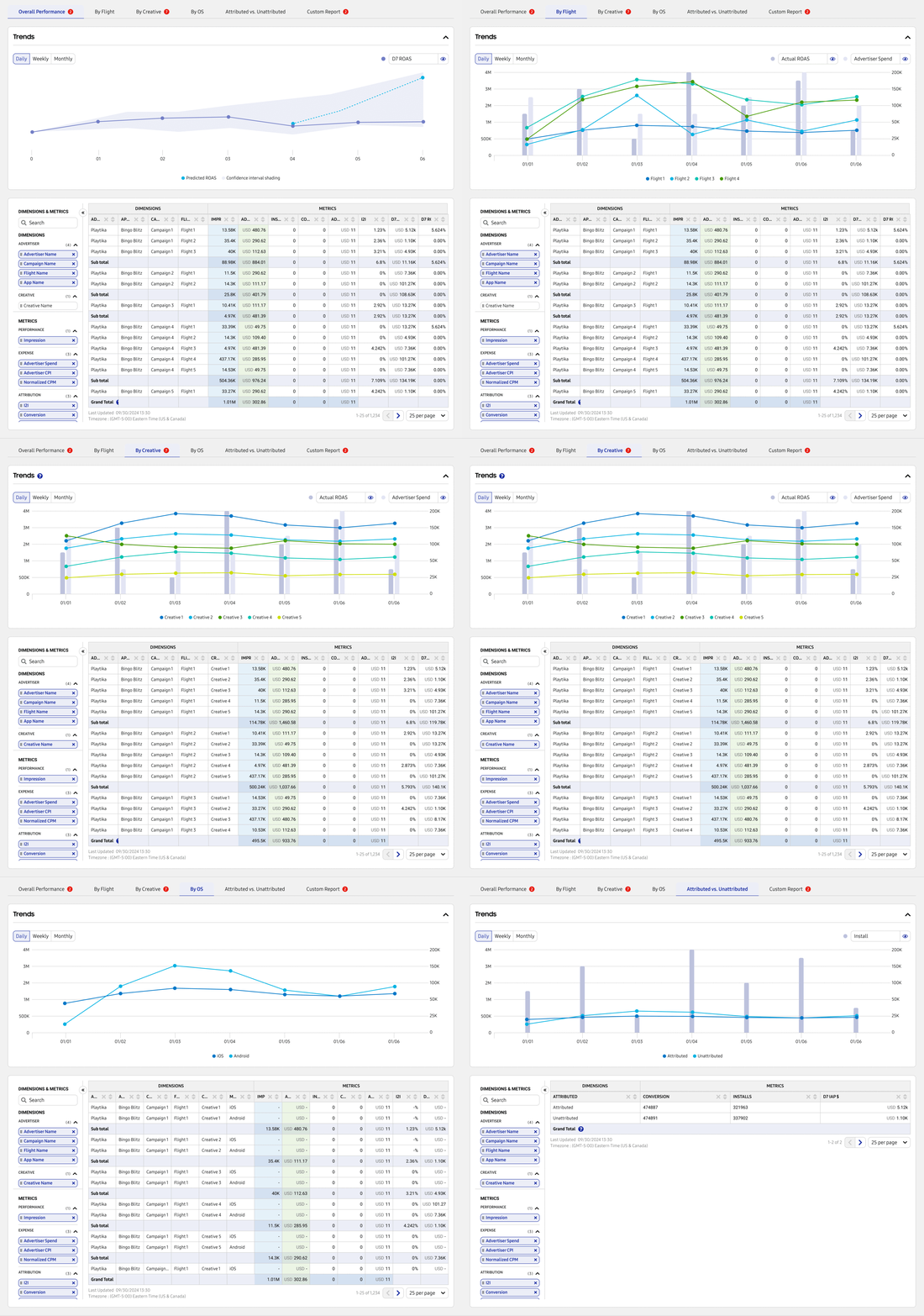
Layered drill-down
Overview to campaign, flight and creative
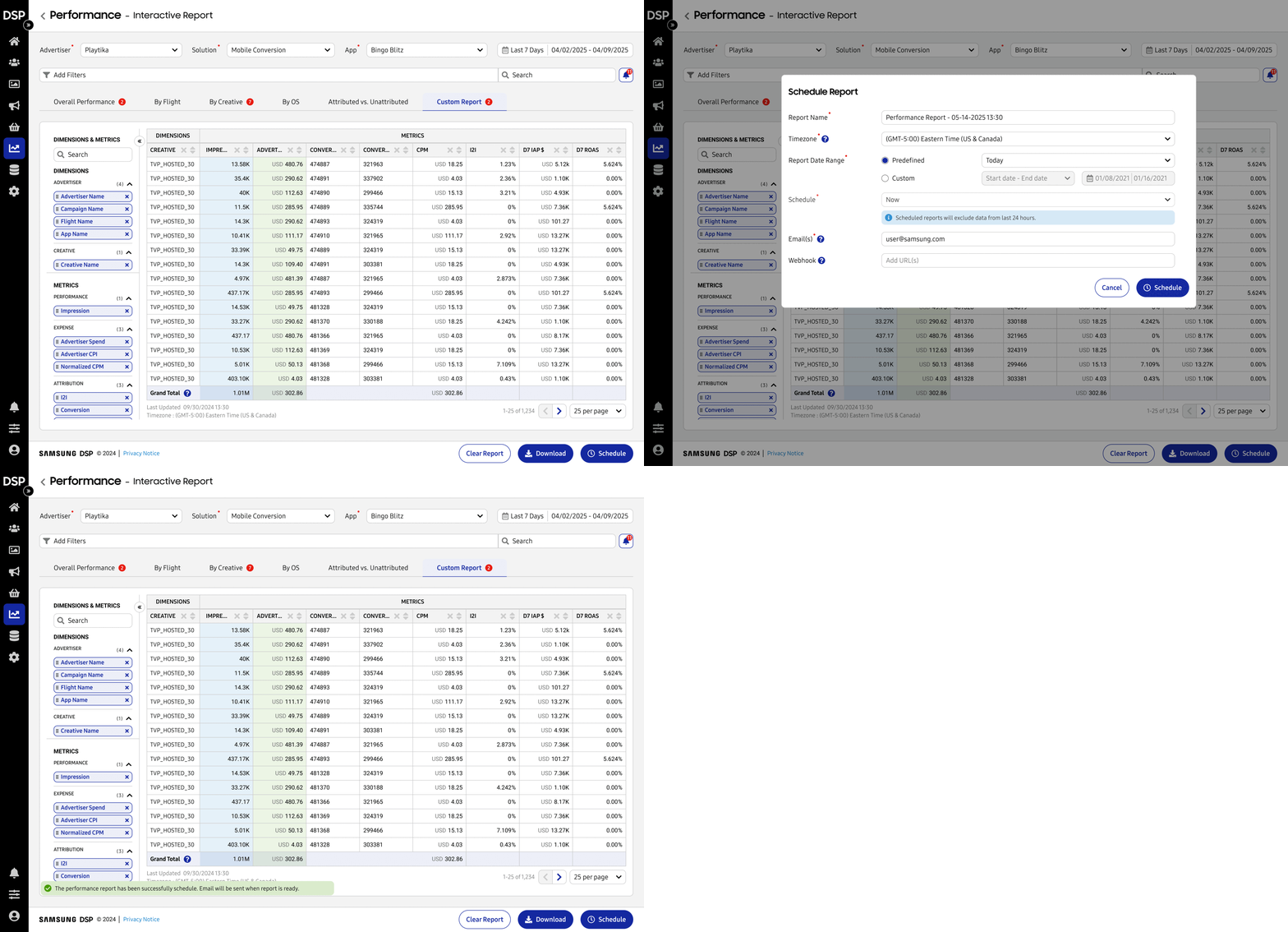
Export and schedule
One place, one click
DESIGNED WITH USERS
What users asked for, and what I built
CSM and Sales
AdOps
AdOps
CSM
CSM
WHAT THEY NEEDED
Several audiences in one view for pitches
Faster setup with fewer errors
Accurate install and in-app purchase tracking on iOS and Android
A simple view to confirm client ROI
Client reports without manual work
WHAT I DESIGNED
Multi-source selection, Boolean logic, live forecast
Contract auto-fill, ML defaults, MMP validation
Solution-first reporting with per-app consolidation
Overview first, drill-down on demand
One-click export and scheduling
WHO
What changed for the people using it
-
"I cut my reporting time in half. What used to take me hours now takes just minutes."
— CSM and AdOps
-
"The accuracy has been a game-changer. I don't have to worry about manual errors anymore."
— CSM and AdOps
-
"Our ROAS optimization… achieved over 142% of target. Happy to raise the daily spend."
— King Gaming, Candy Crush
WHAT I LEARNED
People trust ML when they can see and change its choices
Automate the predictable
Defaults worked where intent was clear; choices that depend on strategy stayed with people.
Optimize with ML, but keep it explainable
Showing why ML picked a KPI or audience is what made AdOps comfortable using it.
What I'd do next
Expand CPX across more ad formats and ship real-time optimization reporting, without adding work for AdOps or Sales.
Thank you so much!
Explore My Other Projects
-
![]()
Enhancing Engagement Through Smarter Ad Design
Led a transformation of Samsung Ads’ interactive TV ad experiences—from replicating industry norms to defining a differentiated user-centric platform.
-
![]()
Vision AI to Sport HUB: setting the rules for AI on the biggest screen in the home
Viewers pick up their phone to check a score, a product or a smart-home alert, and miss the show. I designed Vision AI for Tizen and wrote the rules for how AI appears while someone is watching. Sport HUB brings those rules to live sports: ask about the game, shop what's on screen or check on home without leaving the match.
-
![]()
Ad Experience System
Ad Experience System: one design language for TV Plus, Tizen Home and microsites
-
![]()
CPX Campaign – Powering Scalable Performance Growth.
Led the evolution of CPX into a scalable performance platform, expanding support for new ad formats and advertisers while maintaining operational efficiency and enabling real-time optimization.
-
![]()
Stay Safe, Stay Informed with Navify
Roche Information Solutions: Delivering Integrated Digital Solutions for the COVID-19 Era.
-
![]()
Brand Engagement with Fike
Created immersive marketing content and internal resources—from 3D visuals to white papers—that elevated brand engagement, strengthened team readiness, and reinforced strategic brand consistency.